
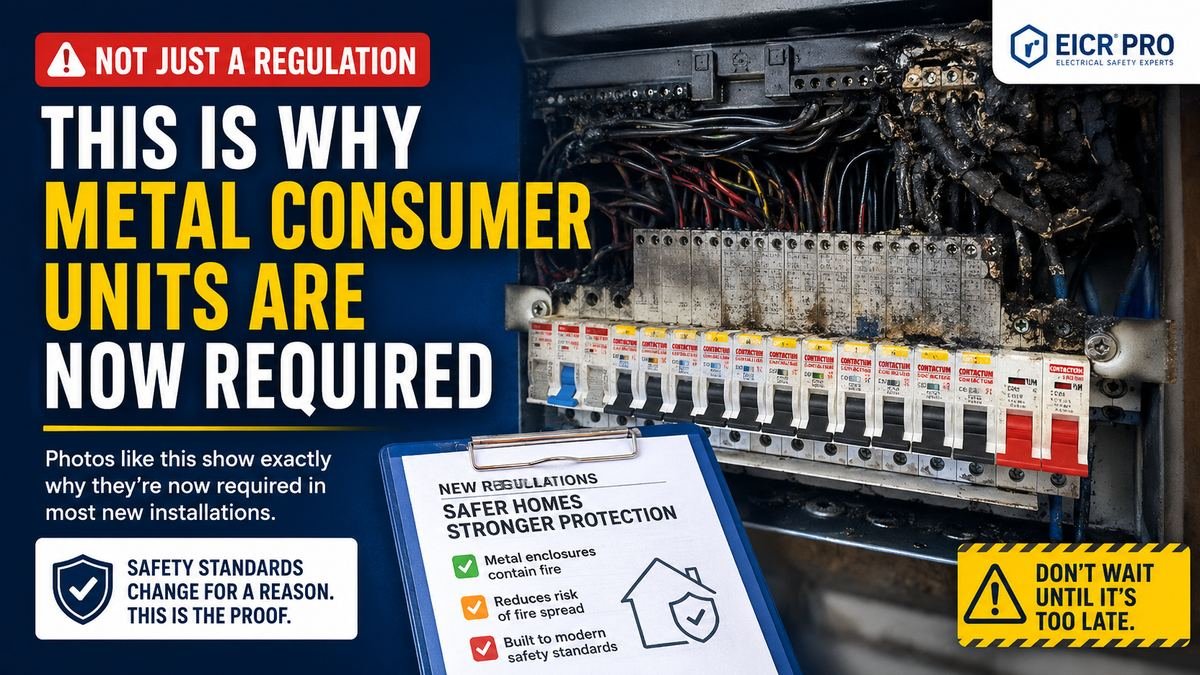
Think a metal fuse board is just another regulation? Photos like this show exactly why they’re now required in most new installations.
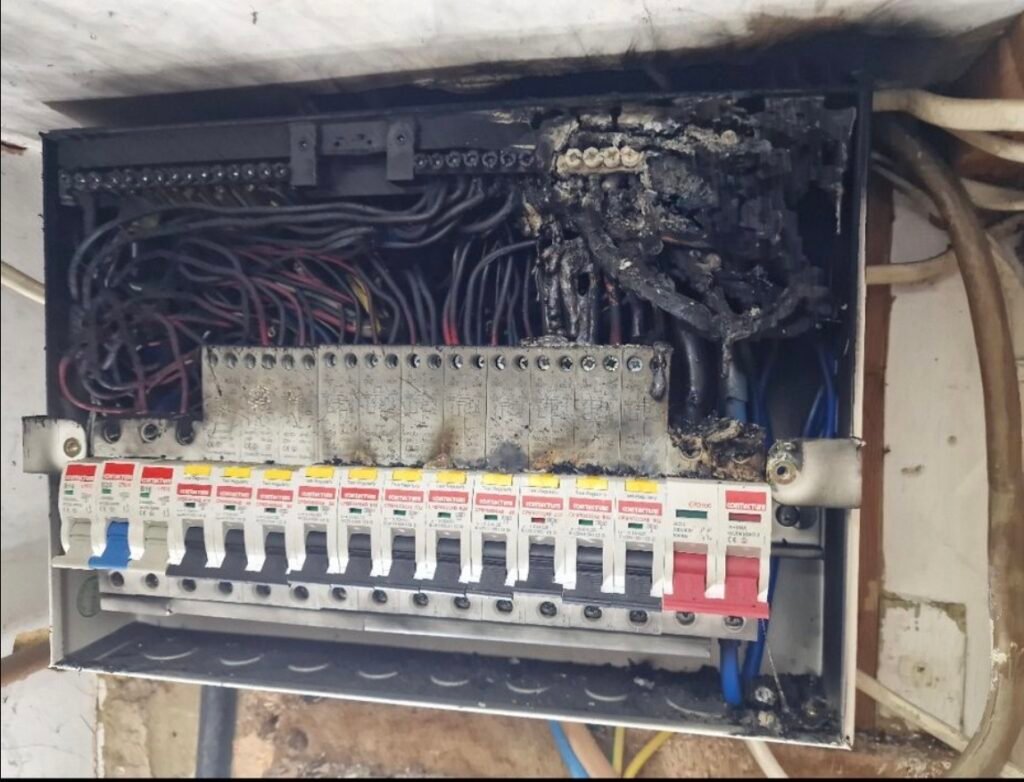
Real example of severe fire damage inside a consumer unit. This was not work carried out by EICR Pro and the precise cause is unknown, but it clearly demonstrates how serious overheating or electrical faults within a consumer unit can become.
Every so often we hear the same comment:
“It’s just another regulation to make electricians more money.”
The reality couldn’t be further from the truth.
The photograph above shows a consumer unit that has suffered a serious internal electrical fire. While we don’t know the exact cause in this case, the damage clearly demonstrates how severe a fault inside a consumer unit can become.
Why Did the Regulations Change?
Since Amendment 3 to BS 7671 in 2015, consumer units installed in domestic properties have generally been required to have non-combustible (metal) enclosures.
This wasn’t an arbitrary rule.
Investigations into a number of electrical fires found that plastic consumer units could allow fire to spread more easily beyond the enclosure, particularly where loose connections or overheating occurred inside the board.
A metal enclosure is designed to help contain a fire, reducing the likelihood of flames escaping into the surrounding building.
No consumer unit can completely prevent a fire if a serious fault develops, but a metal enclosure provides a significantly better level of protection.
What Causes Fires Inside Consumer Units?
Most consumer unit fires aren’t caused by the enclosure itself. Common causes include:
- Loose electrical connections
- Overheating terminals
- Poor workmanship
- Deteriorated components
- Overloaded connections
- Equipment failure
Many of these faults develop slowly over time before eventually becoming dangerous.
Could This Have Been Prevented?
In many cases, regular electrical inspections (EICRs) identify signs of overheating before they become a serious problem.
Inspectors will often find:
- Heat damage
- Loose terminals
- Signs of arcing
- Damaged protective devices
- Age-related deterioration
Finding these issues early is considerably cheaper than dealing with the consequences of an electrical fire.
Should You Replace Your Plastic Consumer Unit?
Not necessarily.
There is no legal requirement to replace an existing plastic consumer unit simply because it’s plastic.
However, if:
- it’s over 20–25 years old,
- has signs of overheating,
- has no RCD protection,
- is being altered significantly,
- or receives an unsatisfactory EICR,
then replacement is often the safest and most cost-effective option.
The Bottom Line
Electrical regulations are written using evidence gathered from real incidents—not to create unnecessary work.
Images like this are a reminder that electrical faults can and do happen.
A modern metal consumer unit, correctly installed and regularly inspected, is one of the best ways to improve the safety of your property’s electrical installation.
If you’re unsure about the age or condition of your consumer unit, an Electrical Installation Condition Report (EICR) can assess whether it’s safe and identify any issues before they become dangerous.
Need your consumer unit checked? Contact EICR Pro to arrange an Electrical Installation Condition Report anywhere across London, Kent or Essex.