
If you’ve received an Electrical Installation Condition Report (EICR), you’ll notice codes like C1, C2, C3 and FI throughout the report. These aren’t just technical labels — they determine whether your property is safe and whether you need to carry out work.
For landlords, understanding these codes matters. A failed EICR can delay a tenancy, create issues with agents, and in some cases lead to enforcement action if not dealt with properly.
This guide explains what each code means, whether your report passes or fails, and what you should expect next.
What Are EICR Codes?
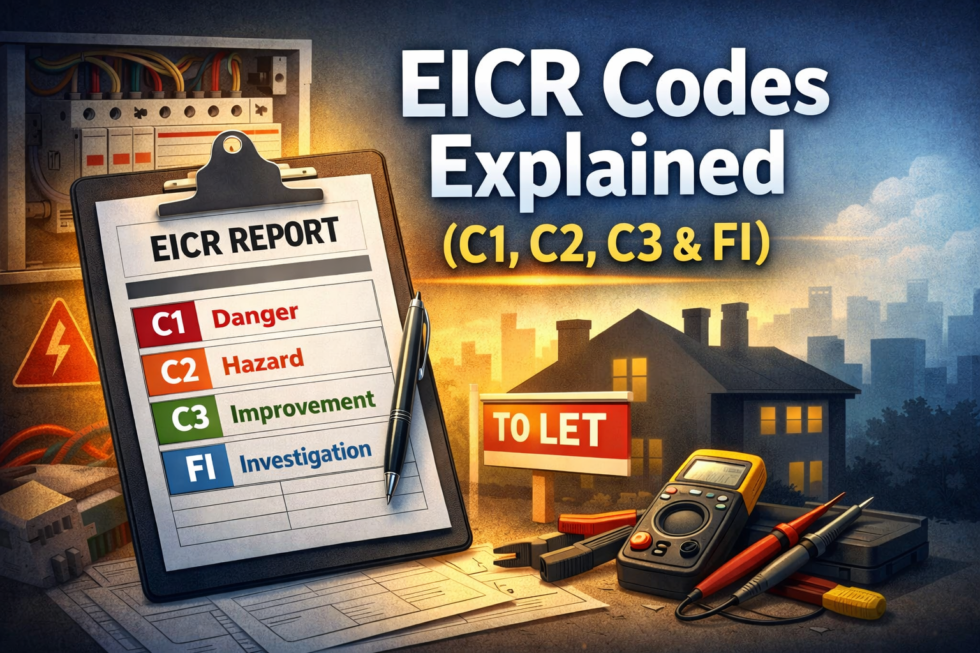
EICR codes are used by electricians to classify issues found during testing. Each observation is given a code based on how serious it is and whether it poses a risk.
- C1 – Danger present (immediate action required)
- C2 – Potentially dangerous (urgent remedial work required)
- C3 – Improvement recommended
- FI – Further investigation required
These codes determine whether your report is classed as satisfactory or unsatisfactory. If you haven’t already arranged testing, you can view our EICR inspection service for landlords.
Does an EICR Fail with C2 or C3?
This is usually the first question landlords ask.
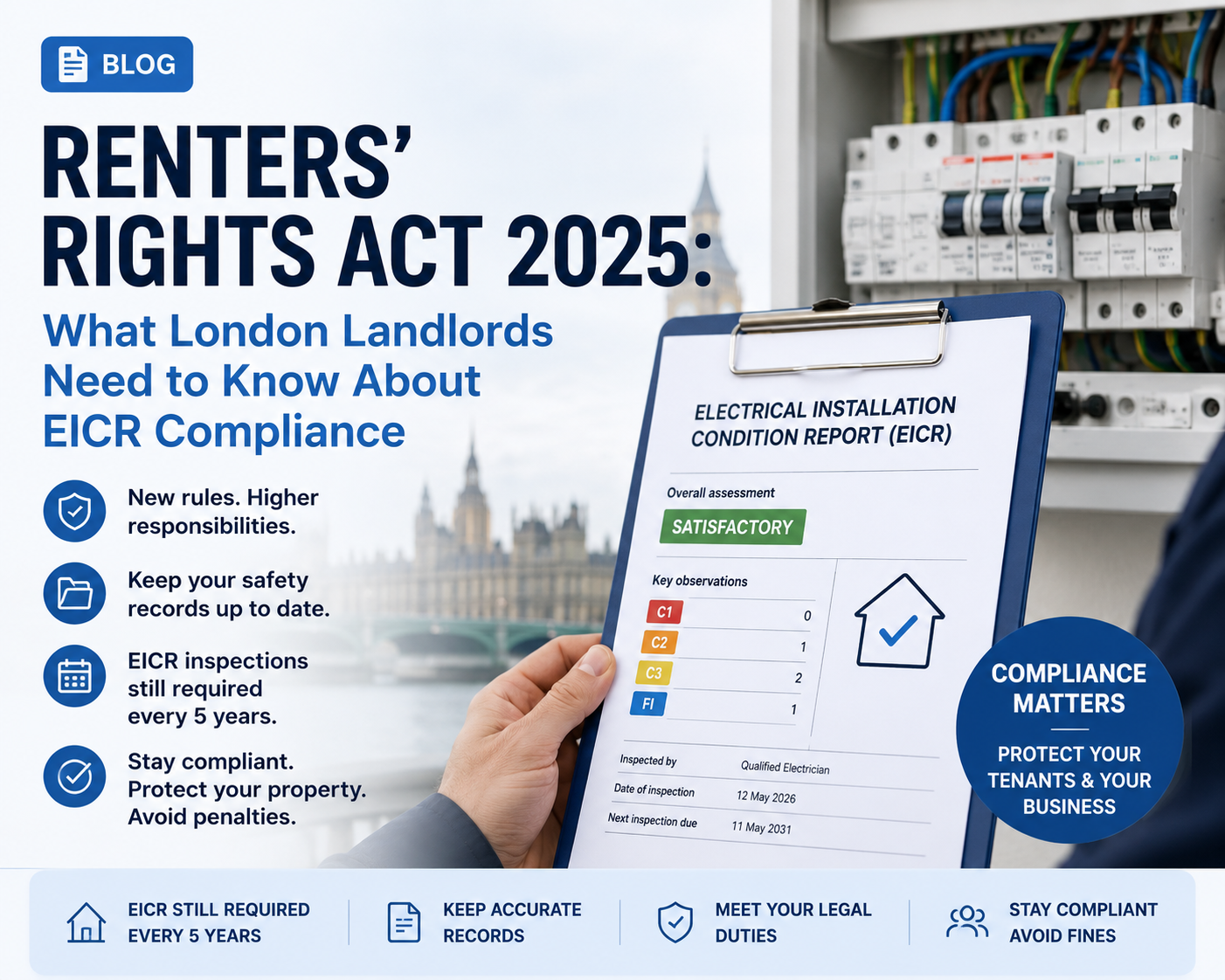
- C1 or C2 = Unsatisfactory (FAIL)
- C3 only = Satisfactory (PASS)
- FI = Usually treated as unsatisfactory until resolved
If your report contains C2 observations, remedial works are typically expected within 28 days.
C1 Code – Danger Present
A C1 classification means there is an immediate risk of injury or fire. This isn’t something to leave — action is required straight away.
Typical examples include:
- Exposed live conductors
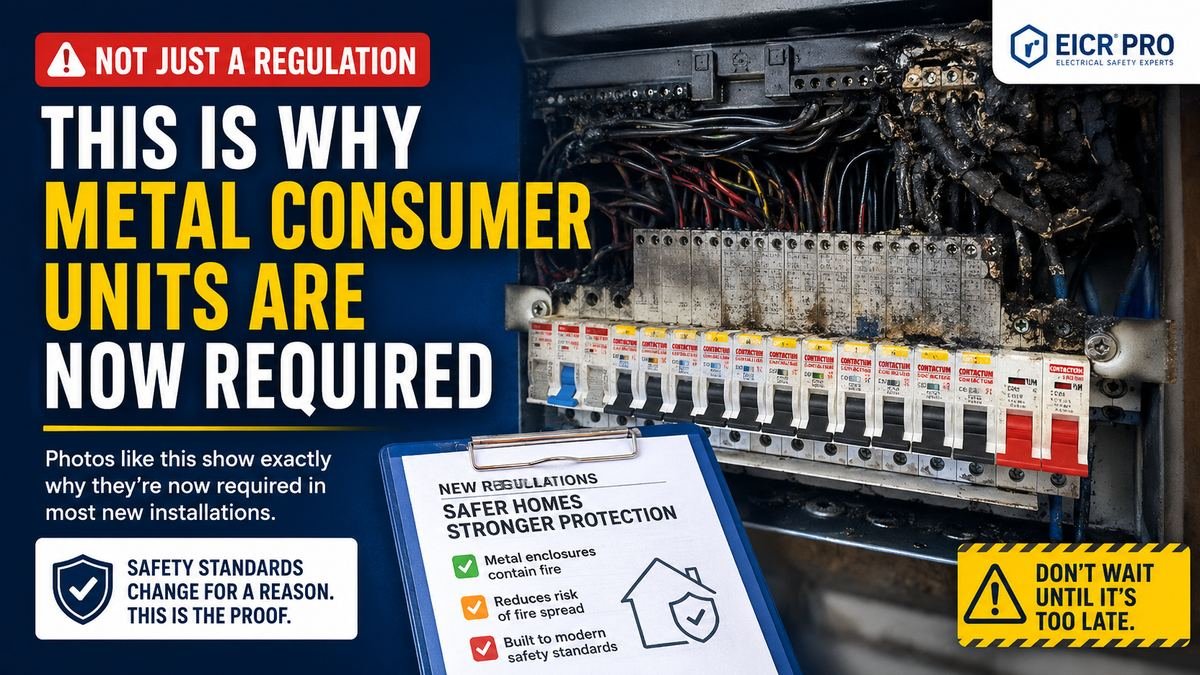
- Burnt or damaged consumer units
- Missing covers exposing live parts
- Incorrect polarity making metal parts live
In many cases, the electrician will isolate the affected circuit immediately.
C2 Code – Potentially Dangerous
A C2 means the issue isn’t immediately dangerous, but it could become dangerous under fault conditions. These faults still need to be addressed.
Real-world examples we regularly see include:
- Type AC RCDs installed where DC leakage is present
- High earth fault loop impedance (Zs readings)
- No CPC (earth) to metal switches or fittings
- RCDs failing disconnection times
Anything coded C2 will result in an unsatisfactory report.
C3 Code – Improvement Recommended
A C3 is different. It means the installation isn’t unsafe, but improvements are recommended to bring it up to modern standards.
Common examples include:
- No surge protection device (SPD)
- Older plastic consumer units
- Missing or unclear circuit labelling
C3 observations don’t cause a failure — they’re advisory rather than mandatory.
FI Code – Further Investigation Required
An FI code is used when something can’t be fully confirmed during testing. It doesn’t automatically mean there’s a fault, but it does mean more work is needed to be sure.
Examples include:
- Suspected hidden faults
- Inconsistent or incomplete test results
- Unusual circuit behaviour
Until this is investigated properly, the installation can’t be signed off as safe.
Why Did My EICR Fail When the Last One Passed?
This catches a lot of landlords off guard, but it’s very common.
- Regulations have been updated (BS 7671 changes)
- Older installations no longer meet current expectations
- Testing is now more thorough than it used to be
- Faults may have developed over time
A previous “pass” doesn’t guarantee it will pass again — especially if the installation hasn’t been upgraded.
Typical Cost to Fix EICR Codes (UK Guide)
Costs depend on the issue, but as a rough guide:
- RCD replacement: £150 – £300
- Earthing / bonding upgrades: £100 – £300
- Fault finding: £80 – £150
- Consumer unit upgrade: £849 – £999
If there are multiple issues, it’s usually more cost-effective to carry out the work together rather than separately.
What Happens After a Failed EICR?
- You receive a report outlining the issues
- Remedial works are carried out (typically within 28 days)
- Confirmation or certification is issued
- The installation is then classed as satisfactory
Need Help Understanding Your EICR?
If you’ve received a report with C2 observations or you’re not sure what the codes actually mean, you’re not alone.
???? Send your report to us here and we’ll explain exactly what needs doing.
Or book your EICR inspection today:
How long do landlords have to fix EICR issues?
Landlords must complete remedial work within 28 days of the EICR, or sooner if specified in the report.
Can a property be rented with a failed EICR?
No. If an EICR is unsatisfactory, remedial work must be completed before the installation can be considered safe.
What happens after a failed EICR?
A qualified electrician must carry out remedial work and provide confirmation that the installation is safe.