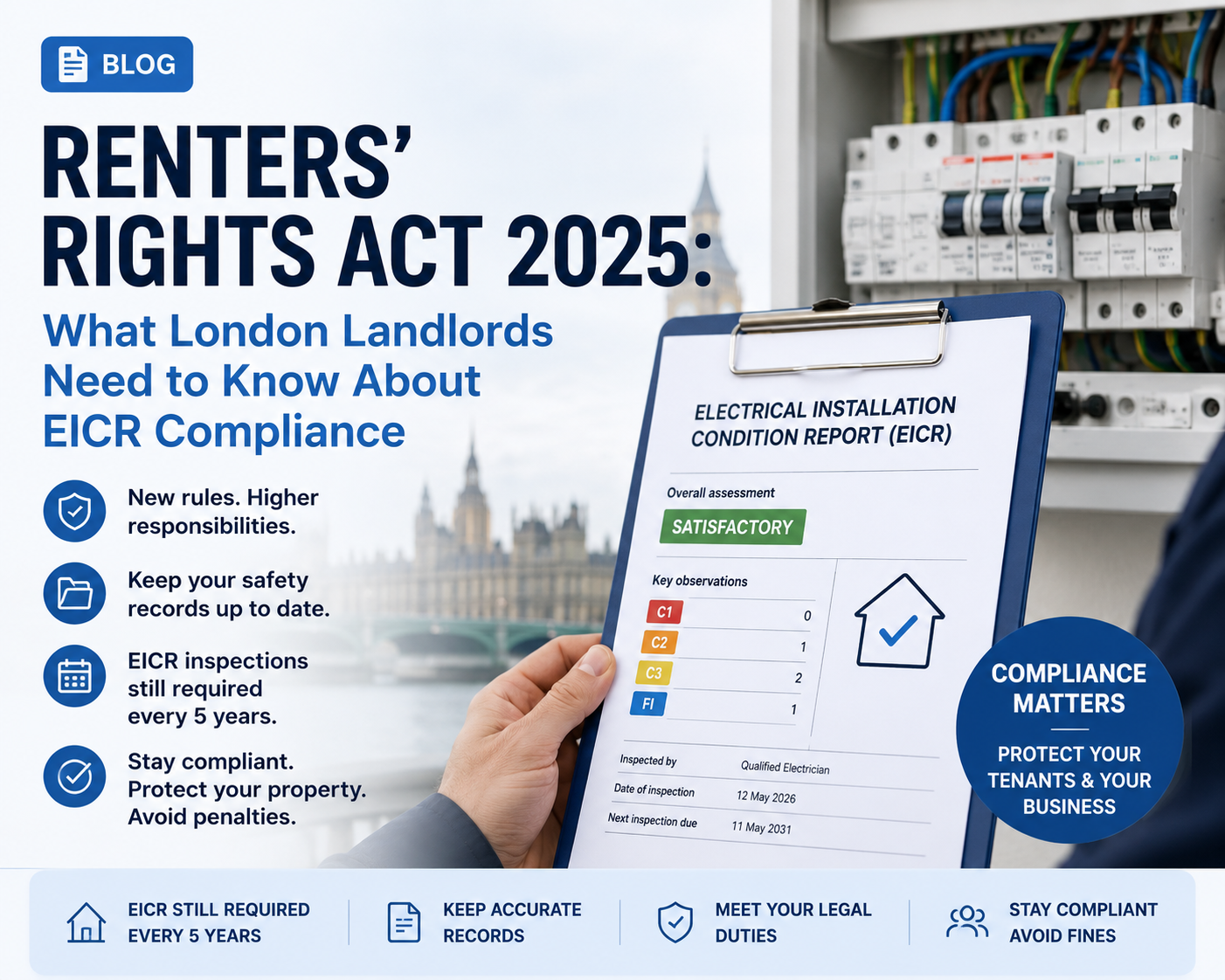

Landlords are already familiar with the need to keep a valid Electrical Installation Condition Report, commonly known as an EICR. In most rental properties, the electrical installation must be inspected and tested at least every five years by a qualified person.
However, from 1 October 2026, important industry changes are expected to affect the competence requirements for those carrying out periodic inspection and testing work, including EICRs. NICEIC guidance says businesses will have until this date to meet new requirements for electrical work undertaken in the relevant work categories, while separate NICEIC guidance on periodic inspection and testing refers to Level 3 qualifications, evidence of experience, and continuing professional development.
For landlords, the legal duty is not changing in a complicated way. The main point is simple: choosing the right electrician is likely to become even more important.
Why Are These Changes Being Introduced?
Electrical inspections are a key part of rental property safety. An EICR helps identify damage, deterioration, defects, and potential risks before they develop into more serious problems.
The industry has been moving towards higher and more consistent standards for inspection and testing. The aim is to make sure that electricians carrying out this type of work have the right qualifications, practical experience, and proven competence.
For landlords and letting agents, this should help improve confidence in the quality and reliability of electrical safety reports.
What Could Change From October 2026?
The expected changes place greater emphasis on the competence of electricians who carry out inspection and testing work.
In practice, this means inspectors may need to provide stronger evidence of relevant qualifications, experience in periodic inspection and testing, and ongoing professional development. NICEIC’s guidance refers to requirements including an acceptable Level 3 qualification, at least two years’ evidence of experience in periodic inspection and testing, and CPD.
For landlords, the key message is that EICRs should always be carried out by a suitably qualified and competent electrician with specific inspection and testing knowledge.
Do Landlords Need To Take Action?
For most landlords, there is no immediate action required.
The main legal requirement remains the same: rental properties must continue to have their electrical installations inspected and tested at least every five years, or sooner if the previous report recommends an earlier inspection.
What may change is the need to be more selective when choosing an electrical contractor. Landlords should avoid making decisions based on price alone and should look for electricians who specialise in EICRs, understand rental compliance, and are registered with recognised industry bodies.
Why This Matters For London Landlords
London has one of the UK’s largest and most varied rental markets.
Many properties include older wiring, previous consumer unit upgrades, extensions, conversions, and historic alterations. These factors can make an EICR more complex and increase the importance of using an experienced inspector.
A thorough inspection can help identify issues early, reduce the risk of future disruption, and give landlords confidence that their property has been assessed properly.
Keeping Your EICR Up To Date
Whatever happens in October 2026, landlords should continue to treat EICRs as an essential compliance document.
A valid EICR shows that the electrical installation has been inspected and tested within the required timeframe. It also gives landlords an opportunity to deal with defects before they become more expensive or create safety concerns.
Alongside gas safety records, tenancy documents, deposit protection, and other landlord responsibilities, electrical safety remains a core part of property compliance.
Final Thoughts
The expected October 2026 changes form part of a wider push to raise standards across the electrical inspection industry.
For landlords, the advice is straightforward: keep your EICR up to date, use a competent and properly qualified electrician, and maintain accurate compliance records.
As further guidance becomes available, landlords should stay informed and work with contractors who understand the latest industry requirements.
If your EICR is due for renewal, EICR Pro provides Electrical Installation Condition Reports across London, with fast turnaround times, digital certification, and support for landlords, letting agents, and property managers.