
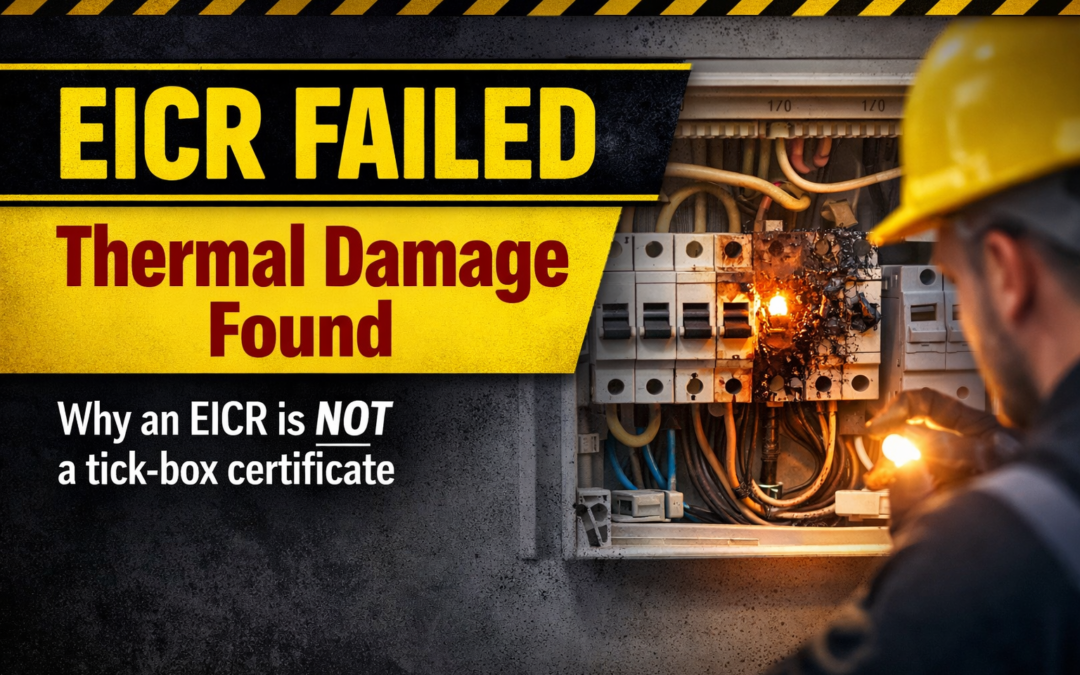
Many landlords assume that an Electrical Installation Condition Report (EICR) is simply a certificate issued after a quick look at the fuse board.
In reality, an EICR is a detailed electrical safety inspection designed to identify hazards within the fixed electrical installation of a property. If safety issues are discovered, the installation can fail the inspection and the report will be issued as unsatisfactory until the problems are corrected.
The example below shows why an EICR is far more than just paperwork.
Real Example From an EICR Inspection
During an inspection of a rental property, the consumer unit below was examined as part of the Electrical Installation Condition Report.

Example of thermal damage visible on a consumer unit during an EICR inspection.
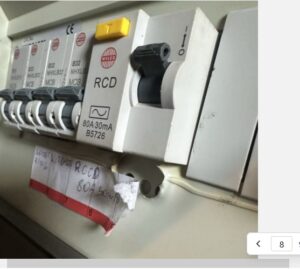
In this case, the damage was actually visible from the outside of the consumer unit. The casing showed clear signs of overheating and heat damage.
Despite this, the landlord had not realised there was a problem because the electrical installation in the property still appeared to work normally. Lights and sockets were functioning, so there was no obvious reason to suspect a fault.
This situation is more common than many landlords realise.
What Thermal Damage in a Consumer Unit Means
Thermal damage occurs when electrical components become excessively hot over time. This can be caused by issues such as:
- Loose electrical connections
- Overloaded circuits
- Deterioration of protective devices
- Poor installation of wiring within the consumer unit
When electrical resistance increases at connection points, heat builds up inside the consumer unit. Over time this heat can damage insulation, melt plastic components and in serious cases lead to electrical fires.
Visible heat damage on a consumer unit is treated seriously during an EICR inspection because it indicates that the installation may no longer operate safely.
In most cases this type of defect would result in a C2 observation (potentially dangerous), meaning the EICR would be issued as unsatisfactory until the issue is corrected.
Why the Property Still Appeared to Work Normally
Electrical systems can continue to operate even when dangerous faults exist.
Lights may still work and appliances may still operate, but underlying problems such as overheating connections or damaged components may already be developing.
This is why electrical safety inspections involve more than simply checking that power is working. The condition of the installation must also be assessed.
Another Issue Often Found During EICRs: Incorrect IP Protection
Another common issue discovered during inspections is the use of electrical fittings that do not have the correct IP rating.
IP stands for Ingress Protection, which indicates how well electrical equipment is protected against dust and moisture.
In locations such as bathrooms, kitchens or outdoor areas, electrical fittings must have appropriate protection against water.
If fittings without adequate IP protection are installed in areas exposed to moisture, this can significantly increase the risk of:
- Electric shock
- Short circuits
- Damage to electrical equipment
Where electrical equipment does not meet the required protection levels, this may also be recorded as a C2 observation during the EICR inspection.
Why Proper EICR Inspections Matter
Electrical installations naturally deteriorate over time. Connections loosen, protective devices age and components can overheat without obvious warning signs.
A properly carried out EICR helps identify these problems before they become dangerous.
Rather than simply being a certificate, an EICR provides a professional assessment of the safety of the electrical installation at the time of inspection.
Need an EICR Certificate in London?
If you need a professional Electrical Installation Condition Report in London, our qualified electricians carry out thorough inspections for landlords, letting agents and property managers.