
If you’re a landlord, one question keeps coming up: how often do I actually need an EICR?
You’ve likely heard “every 5 years.” That’s the standard answer—but it’s only part of the story. In reality, the correct timeframe can vary depending on your property, its condition, and what your last report says.
This guide gives you a clear, no-nonsense explanation so you can stay compliant, avoid penalties, and—most importantly—keep your tenants safe.
The Standard Rule: What Most Landlords Follow
For most rental properties in England, the requirement is straightforward:
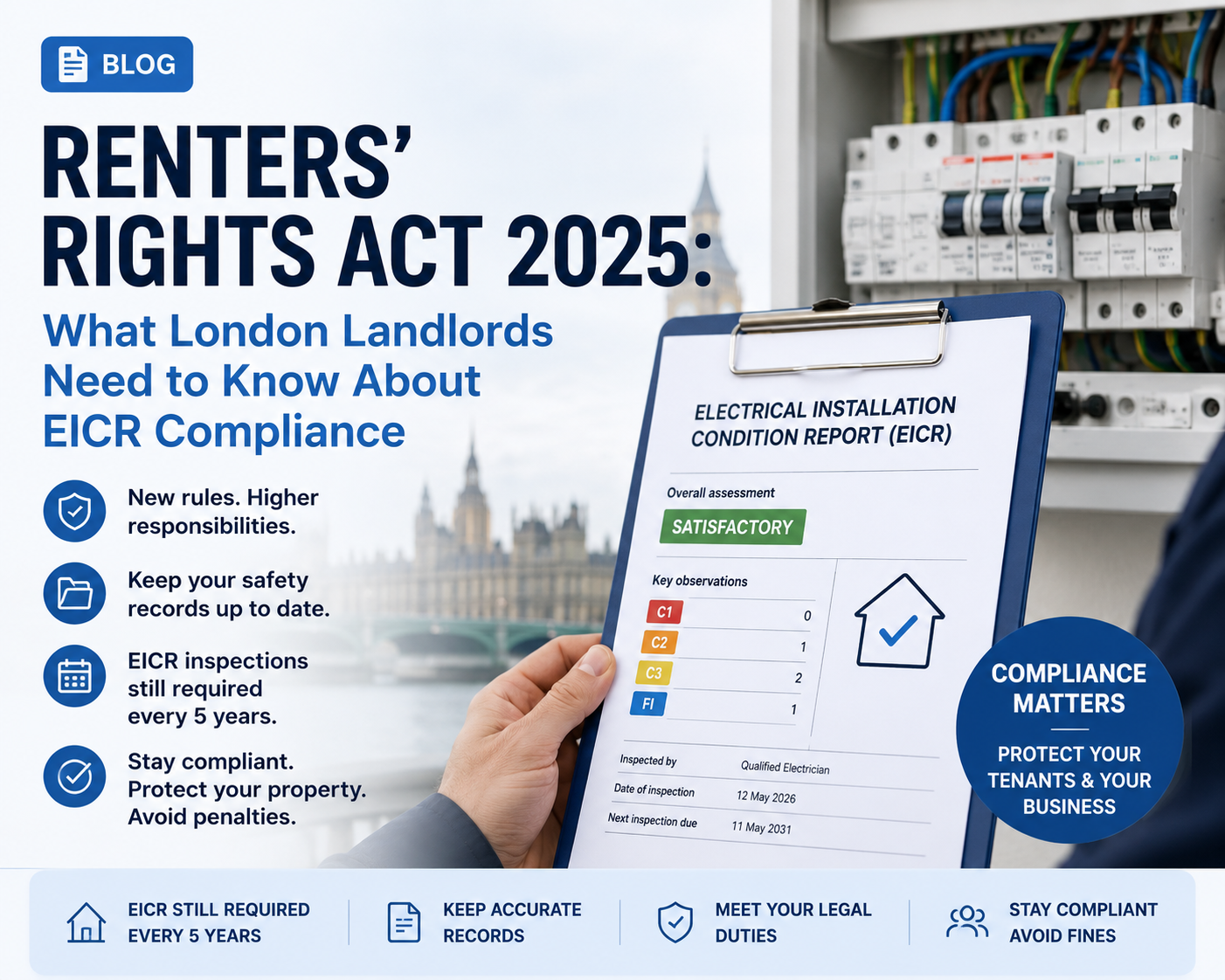
- An EICR must be carried out at least every 5 years
- It is strongly recommended at the start of every new tenancy
This requirement comes from the Electrical Safety Standards in the Private Rented Sector (England) Regulations, which legally oblige landlords to ensure electrical installations are safe.
Once completed, you must:
- Provide a copy of the report to your tenants
- Keep it on record for future inspections
Simple enough—but this is where many landlords stop reading, and where mistakes begin.
Why “Every 5 Years” Isn’t Always Correct
Here’s the part most people miss: an EICR does not automatically last 5 years.
The electrician who conducts the inspection sets the next recommended inspection date based on what they find. That recommendation is not optional—it becomes your legal timeframe.
So if your report states:
- “Next inspection in 3 years” → you must comply within 3 years
- “Next inspection in 1 year” → you must act within 1 year
Ignoring this and assuming 5 years can leave you non-compliant without realising it.
What Triggers a Shorter Inspection Interval?
Several factors can lead to a reduced validity period:
- Older wiring systems that may be deteriorating
- Previous observations or coded issues on earlier reports
- High electrical demand (e.g. HMOs or heavily used properties)
- Recent alterations or additions to the installation
In short, the worse the condition—or the higher the risk—the sooner your next inspection will be due.
Is an EICR Legally Required?
Yes. If you’re a landlord in England, having a valid EICR is not optional—it’s a legal obligation.
You are required to:
- Ensure the electrical installation is inspected and tested regularly
- Provide the report to tenants within required timeframes
- Carry out any remedial work if the report is unsatisfactory
If your report contains C1 (Danger Present) or C2 (Potentially Dangerous) codes, you must act quickly to resolve them.
This isn’t just compliance—it’s about preventing real risk.
What Happens If You Don’t Comply?
Non-compliance isn’t taken lightly.
Local authorities can issue fines of up to £40,000 per breach. In addition, they can:
- Serve enforcement notices
- Arrange remedial work themselves and bill you
- Take further legal action if necessary
But the financial penalty is only part of the issue.
If an electrical fault leads to injury, fire, or damage—and you don’t have a valid EICR—you could face serious legal liability.
At that point, it’s no longer about compliance—it’s about accountability.
The Most Common (and Costly) Mistakes Landlords Make
Even experienced landlords get caught out by the same misunderstandings:
- Assuming every EICR automatically lasts 5 years
- Overlooking the “next inspection” date written on the report
- Failing to act on unsatisfactory results
- Believing a property will always pass because it did previously
The reality is simple: electrical systems degrade, and standards evolve.
A property that passed 5 years ago may not meet today’s safety expectations.
How to Stay Compliant Without the Stress
Staying on top of your EICR doesn’t have to be complicated. Follow this simple system:
- Track your last EICR date
- Check the next inspection deadline stated on the report
- Book your next inspection early (don’t wait until expiry)
- Act immediately on any remedial work
Think of it as routine maintenance—not a last-minute obligation.
Landlords who stay proactive rarely run into issues.
Final Thoughts: The Real Answer
So, how often is an EICR required?
Usually every 5 years—but only if your report allows it.
The safest approach is to treat each EICR as part of an ongoing safety cycle, not a one-off certificate.
Because at the end of the day, it’s not just about ticking a legal box—it’s about ensuring your property is genuinely safe for the people living in it.
If you need help arranging an inspection or reviewing your current report, our team can assist across London and surrounding areas.