
A major update for landlords, letting agents and property managers across England.
October 2026 has brought some of the most significant changes to electrical inspection and testing in recent years.
From changes to the way Electrical Installation Condition Reports (EICRs) are classified, to increased financial penalties and new responsibilities for social landlords, there is plenty that property professionals need to understand.
At EICR Pro, we’ve put together a practical guide to the latest developments and what they mean for rental properties.
1. Major EICR Change: FI No Longer Automatically Means an Unsatisfactory Report
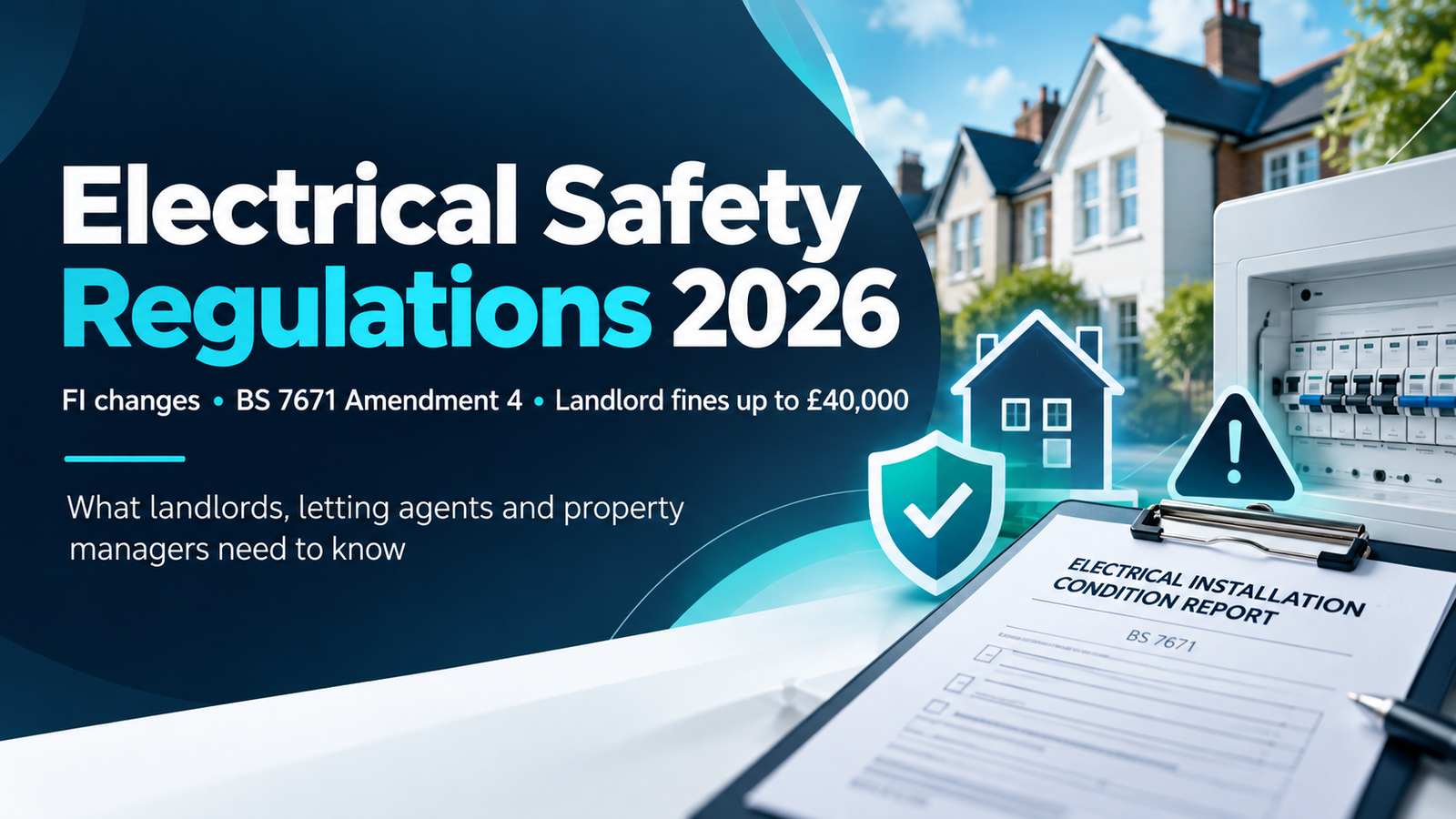
One of the biggest changes introduced by BS 7671:2018+A4:2026 concerns the Further Investigation (FI) classification code.
Previously, an FI observation resulted in an unsatisfactory EICR outcome.
Under Amendment 4, an FI observation no longer automatically causes the overall assessment to be unsatisfactory.
The updated reporting structure separates observations indicating danger or potential danger from recommendations for improvement or further investigation.
What the new classification codes mean
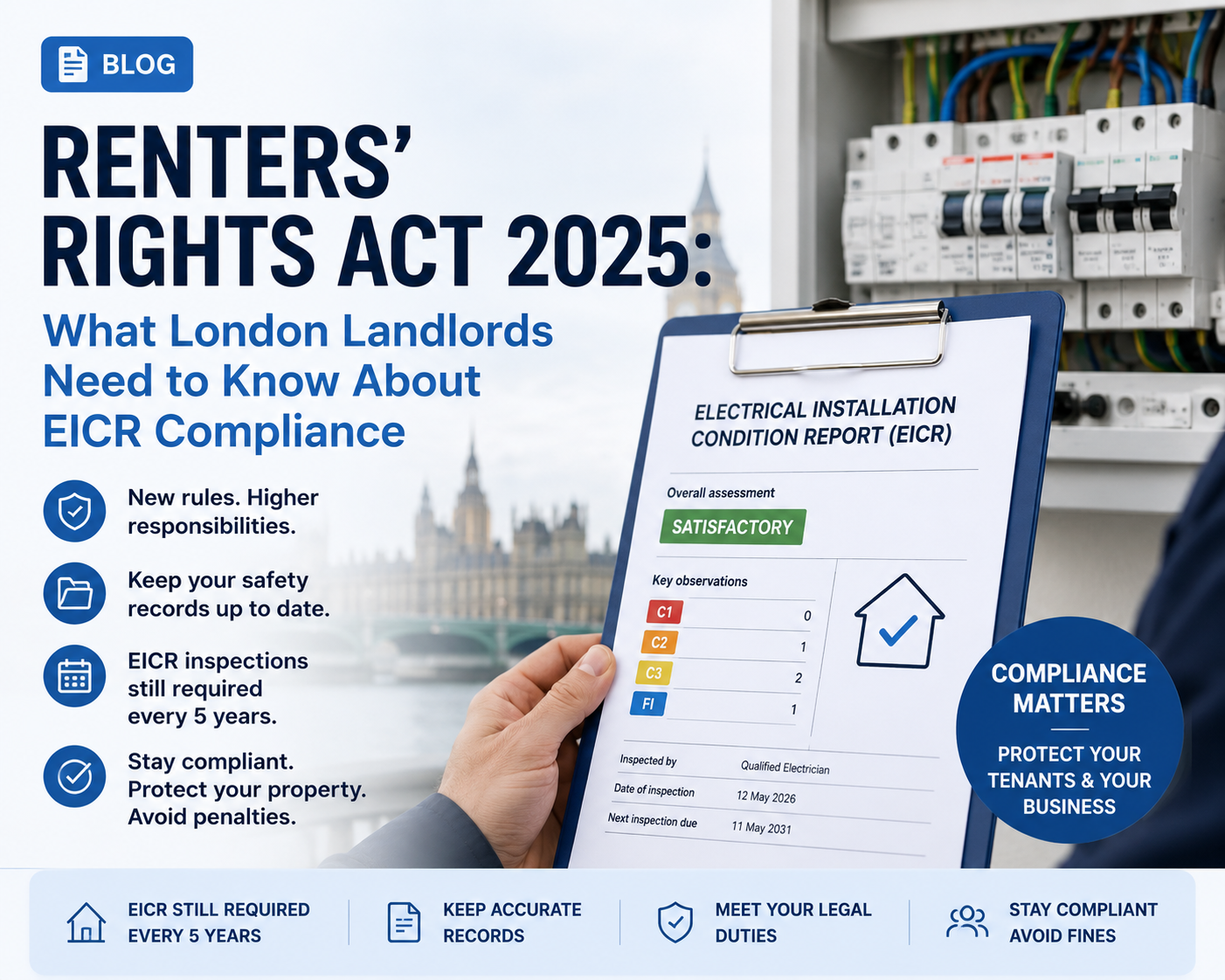
| Code | Meaning | Effect on EICR |
|---|---|---|
| C1 | Danger present — immediate remedial action necessary | Unsatisfactory |
| C2 | Potentially dangerous — urgent remedial action necessary | Unsatisfactory |
| C3 | Improvement recommended | Does not automatically make the report unsatisfactory |
| FI | Further investigation advised | Does not automatically make the report unsatisfactory under Amendment 4 |
This is a significant development for landlords, who may previously have received an unsatisfactory result because an electrician identified an issue requiring further investigation without establishing an actual danger.
However, FI does not mean that a potentially dangerous issue can simply be ignored.
Inspectors must still make a professional assessment, provide appropriate explanations and assign the correct classification where evidence of danger exists.
Where an FI observation is recorded, landlords should consider the recommended investigation and any associated risks.
There is also an important transition between the new technical standard and landlord legislation. The Government has introduced draft amendments intended to remove older statutory references to further investigative work from 30 November 2026.
Until the legal changes take effect, landlords must continue to comply with the legislation applicable to their inspection and report. The proposed regulations also preserve existing statutory requirements relating to investigations identified in earlier reports.
2. BS 7671 Amendment 4 Is Now the Current Wiring Regulations
Amendment 4 to BS 7671 was published on 15 April 2026.
Following a six-month transition period, the previous version was withdrawn on 15 October 2026.
Electrical professionals should now be working to:
BS 7671:2018+A4:2026 — Requirements for Electrical Installations.
The amendment includes updates covering:
- Electrical energy storage and stationary battery systems.
- Functional earthing arrangements for information and communication technology.
- Power over Ethernet installations.
- Medical electrical installations.
- Electrical installation condition reporting and classification guidance.
For landlords, the most immediately relevant change concerns the way EICR observations are recorded and assessed.
A newer edition of the Wiring Regulations does not automatically mean that every existing electrical installation must be upgraded to meet every new requirement.
Electricians must assess existing installations appropriately and determine whether identified conditions affect safety.
3. Landlord Electrical Safety Penalties Increase to £40,000
Landlords should be aware of a significant increase in the maximum financial penalties for specified electrical safety breaches in England.
From 1 May 2026, local authorities have been able to impose financial penalties of up to £40,000 for relevant breaches under the electrical safety regulations.
Previously, the commonly cited maximum was £30,000.
This makes it particularly important for landlords and property managers to maintain appropriate inspection records, address relevant safety defects and comply with applicable remedial deadlines.
What landlords are required to do
Landlords must generally:
- Arrange electrical inspection and testing by a suitably qualified person at least every five years, or sooner where required.
- Obtain and retain the electrical inspection report.
- Provide copies to tenants within the relevant statutory timescales.
- Address dangerous or potentially dangerous conditions as required.
- Obtain appropriate written confirmation following mandatory remedial work.
- Supply relevant documentation to the local authority when lawfully requested.
The £40,000 figure represents the maximum applicable financial penalty for specified breaches, not an automatic fine for every expired or unsatisfactory EICR.
4. Social Housing Electrical Safety Deadline: 1 November 2026
Another major change involves the extension of electrical safety requirements to the social rented sector.
The regulatory framework now brings registered social housing providers into the five-year electrical inspection regime.
For qualifying social housing tenancies granted before 1 December 2025, transitional arrangements require landlords to ensure that relevant electrical installations are inspected and tested before 1 November 2026.
Social landlords must also meet applicable requirements for checking electrical equipment they provide.
This is especially relevant to housing associations, councils, registered providers and organisations responsible for larger property portfolios.
Property managers should ensure that inspection records are available and that outstanding inspections are arranged in accordance with the applicable deadlines.
5. A New Tenancy Does Not Always Require a New EICR
Another area receiving regulatory clarification concerns whether a landlord must arrange a fresh EICR every time a new tenant moves into a property.
The Government’s proposed amendments clarify that a new inspection is not automatically necessary when an existing qualifying report remains current.
The proposed conditions include that the previous inspection took place within the relevant five-year period and that the report’s next inspection date has not passed.
This is intended to avoid unnecessary duplication while retaining the requirement for landlords to ensure electrical safety.
As these amendments are still progressing through the legislative process at the time of writing, landlords should follow the currently applicable requirements and check for the final legislation before relying on the proposed clarification.
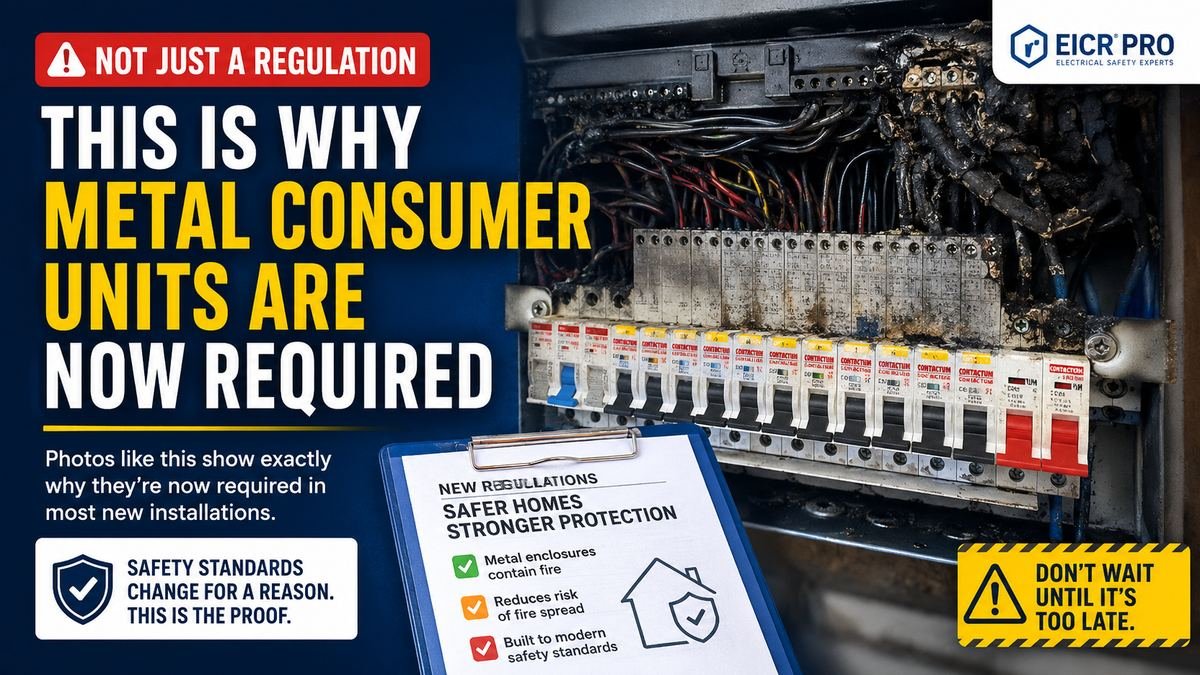
6. Does an Older Consumer Unit Automatically Fail an EICR?
No. The age of a consumer unit alone does not automatically make an electrical installation unsatisfactory.
During an EICR, the inspecting electrician considers matters such as:
- The condition of the consumer unit and protective devices.
- Earthing and bonding arrangements.
- Appropriate protection against electric shock.
- Evidence of overheating, damage or deterioration.
- Manufacturer recalls and known equipment safety concerns.
- The condition and test results of the electrical installation.
An older installation may remain suitable for continued use where no dangerous or potentially dangerous conditions are identified.
Equally, an installation that appears to operate normally may still contain defects requiring urgent remedial work.
Where a consumer unit requires attention, an electrician may recommend replacing individual components or the complete unit, depending on the circumstances, equipment compatibility, condition and available remedial options.
A complete consumer unit upgrade is not automatically required simply because a new edition of BS 7671 has been published.
7. Why Professional Judgement Still Matters
An EICR is not simply a tick-box exercise.
The inspecting electrician must assess the condition of the installation, carry out appropriate inspection and testing, interpret the results and apply the relevant classification codes.
This requires professional knowledge and engineering judgement.
Different competent inspectors may sometimes reach different conclusions when considering particular observations.
However, all classifications must be technically justified and based on the actual condition of the installation.
The changes introduced by Amendment 4 make the distinction between an identified safety danger and a recommendation for further investigation particularly important.
8. What Landlords and Letting Agents Should Do Now
With several important developments taking effect during 2026, landlords and managing agents should review their electrical compliance arrangements.
Check whether your properties have current EICRs, identify outstanding safety-related remedial work and ensure that inspection records are accessible.
If your property portfolio includes social housing, pay particular attention to the relevant November deadline.
Where older reports contain FI observations, check the requirements applicable to those reports before assuming the new technical classification automatically changes their legal status.
Accurate record-keeping and proactive inspection planning remain essential.
How EICR Pro Can Help
At EICR Pro, we provide electrical installation condition reports, testing and remedial services for landlords, letting agents, property managers and commercial clients across London and surrounding areas.
Our services include:
- Domestic and rental property EICRs.
- Commercial electrical inspections.
- Electrical remedial works.
- Consumer unit replacements.
- Support for landlords and managing agents.
- Digital certification and compliance record management.
We also offer our EICR Pro Compliance Portal to selected clients by invitation, helping property professionals organise certificates, track expiry dates and manage electrical compliance across multiple properties.
Book an EICR or request a quotation today.
Contact EICR Pro on 0800 955 3427, or use our online quotation service.
Official Sources and Further Reading
- GOV.UK — Electrical safety standards in the private and social rented sectors
- IET — BS 7671 Amendment 4 and the current Wiring Regulations
- NICEIC — Understanding Amendment 4 and FI classification changes
- UK Parliament — Draft Electrical Safety Amendment Regulations debate, 19 October 2026
This article reflects published technical guidance and the legislative position reviewed on 22 October 2026. Regulatory requirements may change as new legislation comes into force. Property owners should obtain advice specific to their installation and circumstances.